Shopping Cart
Padel enters 2026 from a position of greater sporting, commercial and institutional maturity. The sport's growth is no longer a temporary trend but a structural evolution. The expansion of professional tours, the emergence of new markets, the development of clubs and academies, and the changing expectations of players confirm that the industry has entered a new phase.
This transformation affects the entire ecosystem. International tournaments shape the visibility of players and brands, the FIP rankings fuel new sporting narratives, clubs are becoming commercial hubs, and specialist retailers must serve customers who are better informed and more demanding than ever before.
In 2026, the padel industry operates across three interconnected dimensions: international competition, the business that supports it and the retail environment where enthusiasm for the sport becomes commercial opportunity. Understanding how these elements interact is essential for manufacturers, distributors, specialist retailers, clubs and professionals throughout the sector.
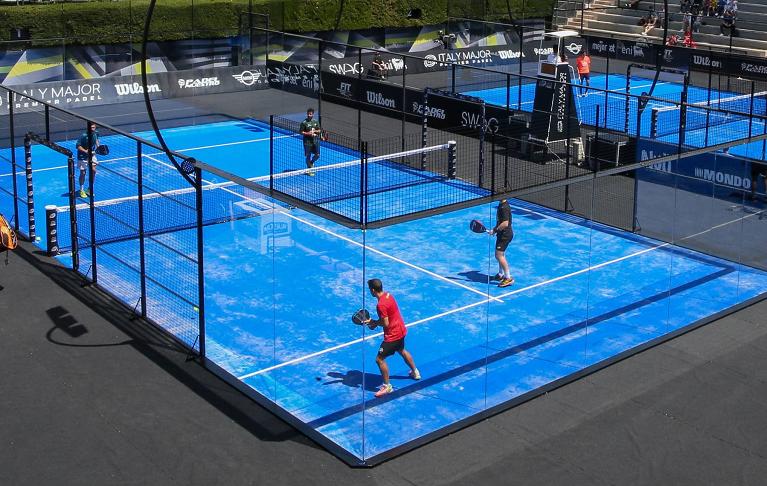
The international padel calendar has become much more than a sporting schedule. Major tournaments create audience engagement, generate media attention and stimulate measurable increases in equipment sales throughout the season.
Every major event attracts thousands of players and fans who closely follow the performances of leading professionals. When a player reaches a final, changes equipment sponsor or debuts a new racket, interest in those products increases almost immediately. This connection between sporting success and purchasing behaviour has become one of the defining characteristics of today's market.
Modern consumers no longer purchase equipment based solely on technical requirements. Inspiration also plays an important role. Many players want to use the same racket as their favourite professional or wear the same footwear seen during major international events.
For specialist retailers and clubs, this creates the need for much more accurate planning. Stock decisions can no longer rely only on traditional seasonal cycles. Businesses increasingly analyse the international calendar to anticipate peaks in demand and prepare merchandising strategies accordingly.
A retailer that understands the tournament schedule can organise themed campaigns, highlight specific brands and refresh promotional areas whenever major competitions generate renewed consumer interest.
This approach does not mean constantly replacing entire product ranges. Instead, retailers benefit from maintaining a stable assortment while reserving selected display areas for products that reflect current sporting trends.
Presentation plays a decisive role. A racket associated with a successful professional generates significantly greater impact when displayed with effective lighting, clear positioning and concise technical information. Without proper merchandising, much of the attention generated by professional competition is quickly lost.
The calendar also helps retailers organise their commercial activity throughout the year. Tournament schedules, new product launches, player partnerships and seasonal club activity all create opportunities to refresh displays, introduce promotions and develop relevant content for customers.
The FIP rankings represent far more than a list of player positions. They create an ongoing narrative that keeps audiences engaged throughout the season, generates rivalries, highlights emerging talent and continually feeds media coverage.
Ranking changes, new partnerships and rapid rises through the standings create conversations across sports media, social platforms and specialist communities. These discussions frequently influence buying behaviour inside stores.
Customers often ask for the equipment used by particular professionals, compare different playing styles and look for products that reflect the characteristics of their favourite players.
The growing international profile of padel means that athletes from many different countries now attract significant attention within their domestic markets. For retailers and clubs, this creates opportunities to tailor campaigns to local audiences while benefiting from international visibility.
Players frequently identify with professionals because of nationality, playing style, personality or online presence. That emotional connection often extends directly to equipment purchases. A racket becomes more than a technical tool—it becomes part of the player's sporting identity.
However, specialist retailers should not simply sell the racket used by a professional player. Their real value lies in determining whether that product genuinely suits the customer's experience, technique and physical characteristics.
A racket designed for elite competition may not be the ideal choice for an intermediate player. The role of the retailer is to transform initial interest into informed purchasing decisions by comparing alternatives and explaining differences in balance, shape, weight distribution, control, power and overall playability.
This consultative approach strengthens customer trust and reduces the likelihood of unsuitable purchases. Professional visibility attracts attention, but expert advice converts attention into long-term customer satisfaction.
One of the strongest trends across the market is the growing demand for rackets that deliver a balanced combination of power, control and comfort. Most recreational players are not looking for extreme performance characteristics. Instead, they prefer equipment that performs consistently in a wide variety of situations.
Players want confidence during attacking shots while maintaining control in defence and comfort during extended matches. Versatility has therefore become one of the most persuasive commercial arguments available to specialist retailers.
This trend should also influence merchandising strategy. Organising rackets solely by manufacturer is often insufficient. Customers find it easier to navigate displays when products are grouped according to playing style, skill level, racket shape or intended performance.
Clear visual organisation improves the customer experience while making product recommendations easier for sales staff. It also prevents displays from becoming overcrowded, allowing customers to compare options more comfortably.
The rankings generate interest and conversation, but specialist retail adds context. Stores transform sporting excitement into an organised, informative and customer-focused buying experience.
Padel continues to expand well beyond its traditional European strongholds. New clubs, academies and modern facilities are opening across North America, the Middle East and parts of Asia, introducing the sport to entirely new audiences.
This expansion creates an interesting commercial challenge. Many new players discover padel without any previous knowledge of racket sports. They are unfamiliar with technical terminology, product categories or equipment differences and therefore require clear guidance throughout the buying process.
In these developing markets, specialist retailers and clubs play an educational role. Explaining product differences, simplifying technical information and creating intuitive merchandising become just as important as offering a wide range of equipment.

The customer journey also varies depending on the maturity of each market. In countries where padel has been established for many years, players generally understand brands, product ranges and technical terminology. In emerging markets, however, retailers must first simplify the buying process and build confidence among newcomers.
This difference requires a flexible commercial strategy. A specialist retailer operating in a mature market can present highly segmented product categories supported by detailed technical advice. In developing regions, a simpler approach is often more effective, using clear product classifications and easy-to-understand recommendations.
International expansion is also encouraging a wider variety of retail formats. Growth does not always begin with large specialist stores. In many countries, the first commercial presence appears through compact retail corners inside clubs, sports centres or multi-brand stores.
These smaller formats allow operators to introduce products gradually, analyse local demand and expand their offer as participation increases. Modular display systems are particularly valuable because they can evolve alongside the business without requiring major refurbishment.
Manufacturers and distributors must therefore become more adaptable. Equipping a large specialist retailer requires a different approach from designing a commercial area inside a club reception. Nevertheless, both environments demand professional presentation, logical organisation and excellent product visibility.
International growth also increases the importance of consistent visual presentation. In developing markets, a professionally organised retail space reinforces confidence in both the sport and the products being sold. Poor presentation, by contrast, can make an expanding market appear less mature than it really is.
The continued internationalisation of padel therefore depends on more than simply building new courts. Sustainable growth also requires education, specialist retail, distribution networks, qualified staff and commercial environments capable of supporting players throughout their journey.
Although professional tournaments receive most of the media attention, the commercial strength of the padel industry is built primarily through amateur players. Local leagues, club competitions, coaching programmes and social tournaments generate the majority of court bookings, equipment purchases and repeat business.
Recreational players represent the largest customer segment. They regularly purchase balls, overgrips, footwear, clothing, bags and accessories, while replacing their rackets every few seasons. They also participate in local competitions, consume specialist content and frequently recommend products to other players.
Amateur competitions perform an important commercial function because they transform padel into a social experience. Players compare equipment, exchange opinions and often discover new products simply by watching others play. Word-of-mouth recommendations remain extremely influential within the sport.
For clubs, these events create valuable retail opportunities. Internal tournaments can be combined with product demonstrations, temporary promotions, racket testing sessions or dedicated brand displays that naturally complement the event itself.
The objective is not to interrupt the sporting experience with aggressive sales activity. Instead, merchandising should become part of the overall customer journey. A well-positioned display near the reception area or a carefully selected promotional collection can stimulate purchases without disrupting the atmosphere.
Amateur competitions also provide valuable customer insights. Frequently asked questions, the products most often tested and the categories with the fastest rotation all help retailers refine future purchasing decisions and improve merchandising strategies.
Padel has always been a highly social sport. Players regularly discuss equipment, compare rackets and share personal recommendations after matches. Trusted advice from teammates often carries greater influence than traditional advertising.
Clubs are uniquely positioned to transform these conversations into meaningful commercial opportunities. Coaches, reception staff and club managers usually understand the playing style, experience and needs of their regular members. With appropriate product knowledge, they can recommend equipment with credibility and confidence.
These recommendations should always be supported by effective merchandising. Suggesting a particular racket becomes far more convincing when customers can immediately see it displayed clearly alongside concise technical information and comparable alternatives.
Community also strengthens customer loyalty. Players who purchase equipment from the club where they train appreciate the convenience, personalised service and ongoing support that local retailers can provide—advantages that are difficult for purely online retailers to replicate.
Modern padel clubs are no longer simply places to play sport. They have evolved into social, educational and commercial spaces where players spend time before and after matches. Reception areas, waiting zones, corridors and lounges have therefore become valuable retail locations.
This does not mean every club should operate a large retail store. In many cases, a carefully selected product assortment displayed professionally delivers better commercial results than a large but disorganised inventory.
High-frequency purchases typically perform particularly well in club environments. Balls, overgrips, grips, protective tape, wristbands, sports drinks and accessories naturally complement the customer's visit, while a curated selection of rackets, footwear and bags broadens the offer.
Location plays a critical role. Products should remain highly visible while preserving comfortable movement throughout the facility. Reception areas are especially effective because every visitor passes through them to check in, make payments or wait for playing partners.
Presentation ultimately determines performance. A premium racket displayed vertically with proper lighting and concise technical information communicates significantly more value than several products placed together without any visual hierarchy.
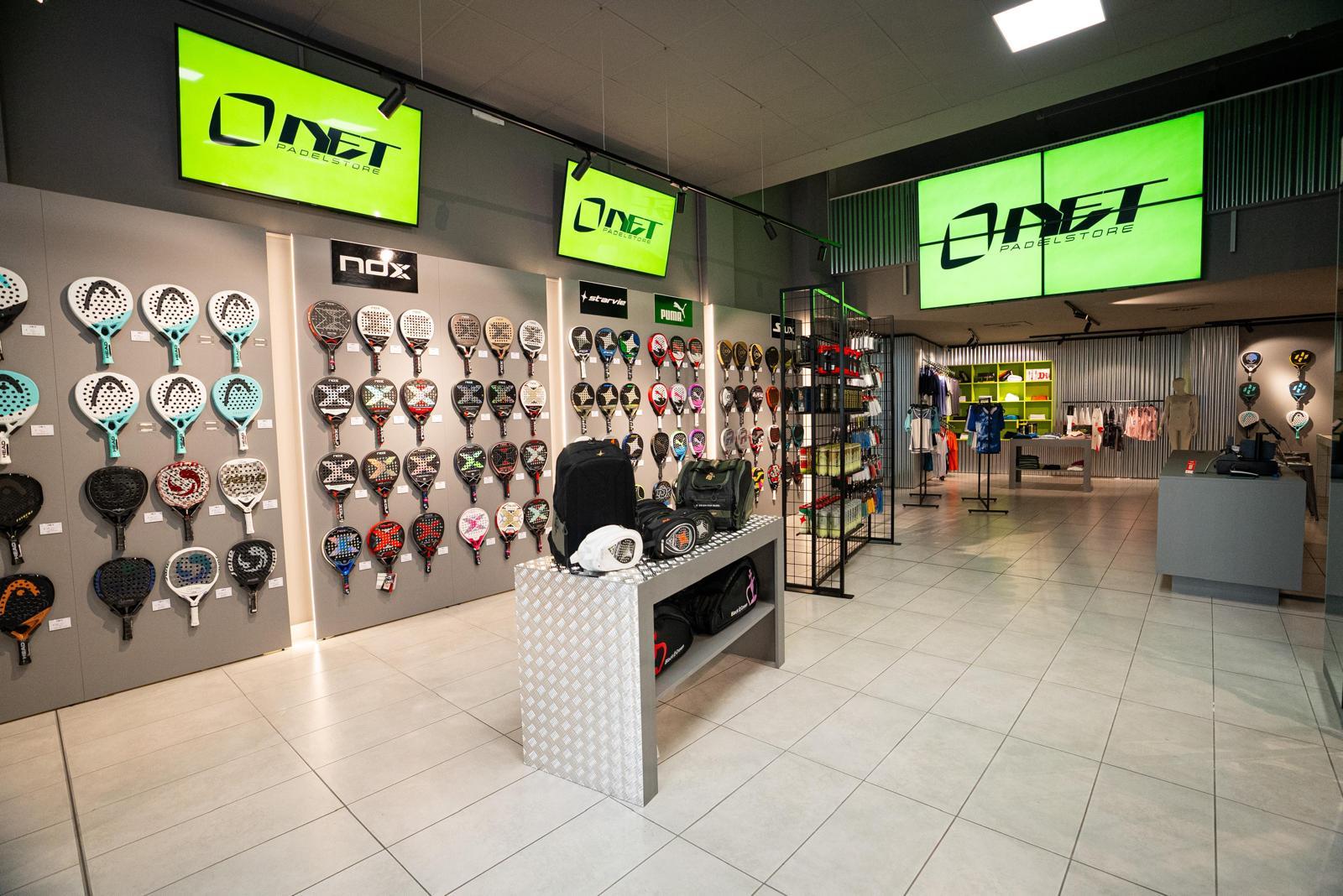
Today's customer values clarity above quantity. Excessive product density often creates confusion and slows purchasing decisions. A selective, well-organised display encourages comparison while reinforcing the perception of specialist expertise.
Retail areas inside clubs should also remain flexible. New collections, seasonal campaigns and tournament promotions require merchandising systems that can be updated quickly without redesigning the entire space.
Modular display systems make this possible by allowing retailers to reorganise categories, maximise wall space and adapt layouts as product ranges evolve. This flexibility is particularly valuable in compact reception areas where every square metre must perform efficiently.
The reception desk is one of the busiest locations within any club. Every visitor passes through it to register, pay, ask questions or wait for their court booking. This concentration of customer attention creates excellent retail potential.
However, success depends on careful planning rather than simply adding more products. Merchandise should be selected according to genuine customer needs and organised with a clear visual hierarchy.
Retail displays should also integrate naturally with digital channels. QR codes can provide additional specifications, display alternative colours, confirm availability or allow customers to complete purchases online if required.
When club retail systems are connected to ecommerce platforms, staff can instantly check inventory, reserve products or arrange delivery from central stock. This seamless integration reduces lost sales while improving customer convenience.
Racket technology continues to develop through new carbon fibre constructions, advanced foam cores, reinforced structures and vibration-reduction systems. Manufacturers increasingly design products for specific playing styles rather than producing universal solutions.
While this technical progress benefits players, it also introduces greater complexity. Terms such as 3K carbon, 12K carbon, hybrid constructions, multilayer cores and anti-vibration technologies may appear impressive, but they often confuse customers when presented without explanation.
Innovation only creates commercial value when customers understand its practical benefits. Simply listing technical specifications rarely influences purchasing decisions. Instead, retailers must translate those technologies into meaningful advantages such as increased comfort, improved control, greater stability or enhanced power.
This educational role belongs equally to sales staff and visual merchandising. Product labels, category signage and comparison displays should simplify complex information without overwhelming customers.
When buyers clearly understand how a particular technology will improve their game, they are far more likely to appreciate the product's value and justify its price.
The most effective product communication is not necessarily the most detailed. Many customers make better decisions when retailers first explain how a racket performs rather than describing every technical specification.
Categories such as maximum control, balanced performance or advanced attacking play often provide a clearer starting point than complex engineering terminology. Technical details can then be introduced progressively as customer interest develops.
This staged approach simplifies comparisons, reduces decision fatigue and allows customers to shortlist suitable products before requesting personalised advice.
Digital tools can further enhance the process. QR codes, interactive displays and digital product information provide deeper technical content without overwhelming the physical retail environment.
Today's padel player enters the buying process with far more information than in previous years. Before visiting a store or speaking to staff at a club, many customers have already consulted reviews, videos, technical comparisons, product specifications and opinions from other players.
This behaviour has completely changed the commercial conversation. Customers no longer expect a basic product description. They want confirmation that the information they have found is accurate, a clear explanation of the real differences between similar products and a recommendation that reflects their playing style.
Transparency has therefore become a decisive factor. Players compare prices, warranty conditions, stock availability, delivery times, return policies and after-sales support. They also value the opportunity to test a racket, receive specialist advice and resolve questions after the purchase.
For retailers and clubs, this creates a higher level of expectation, but also a significant opportunity. An informed customer can make a faster and more confident decision when the product range is well organised and the sales professional is able to interpret the available information.
The problem arises when the physical store adds no real value. If staff simply repeat the manufacturer's specification sheet or if the display does not make comparison easier, customers may see little reason to complete the purchase in that channel.
The competitive advantage of specialist padel retail is therefore no longer based solely on product availability. It depends on the ability to simplify complexity, explain performance differences and guide players towards the most appropriate solution.
Customers expect the same information at every point of contact. Product features, prices, availability and promotions should remain consistent across the website, social media, physical store and club environment.
When these channels provide conflicting information, friction increases. A different price, an inconsistent product description or an item shown as available but missing from stock can quickly damage confidence and lead to an abandoned purchase.
Consistency also applies to presentation. A brand positioned as technical and specialist needs a merchandising environment that supports that identity. In the same way, a retailer that promises expert advice should organise products in a way that makes comparison and explanation easier.
This alignment between communication, space and service is one of the defining characteristics of modern retail. Customers do not consider the digital and physical experience as separate journeys. They see both as part of the same relationship with the retailer or club.
The evolution of the market is not creating a choice between physical retail and ecommerce. Each channel responds to different customer needs and both can become stronger when they are properly integrated.
Ecommerce allows players to browse products, compare prices, access a broad catalogue and place orders at any time. Physical retail provides direct product contact, human advice, testing opportunities, immediate support and greater reassurance.
In practice, many purchasing journeys already combine both environments. A player may discover a racket through social media, research its specifications online, inspect it at a club, ask a specialist for advice and complete the purchase from a mobile phone.
This behaviour requires retailers to create a continuous experience. Customers should be able to begin the process in one channel and complete it in another without losing information or encountering unnecessary barriers.
Services such as online reservation, click and collect, real-time stock visibility, omnichannel returns and delivery from store inventory improve convenience while reducing lost sales.
For clubs with limited commercial space, the omnichannel model is particularly valuable. A compact selection can be displayed physically while QR codes or digital screens provide access to a much wider range of products.
In an omnichannel environment, the store does not need to hold the entire catalogue. It can function as a product discovery, testing and advisory space, while the digital channel extends the range available.
This role requires careful product selection. The items displayed should represent different categories, player levels and price ranges in a balanced and understandable way.
The objective is not to display everything. It is to provide enough structure for customers to identify suitable options and begin a confident buying journey.
A well-designed display can also direct traffic towards ecommerce. A QR code placed beside a racket can show alternative colours, weights, related models or warehouse availability.
As a result, the physical store is no longer restricted by its floor area. It becomes an entry point to the company's complete product catalogue.
Padel retail profitability does not depend only on the number of products available. It is also determined by how effectively walls, fixtures, walkways and high-attention areas are used.
Every square metre should have a defined commercial function. A well-equipped wall can increase display capacity without reducing customer movement. A featured zone can accelerate the rotation of new products. A module near the counter can stimulate complementary purchases.
Excessive product density can produce the opposite result. When rackets are placed too close together, accessories are mixed and no visual hierarchy exists, customers must work harder to understand the assortment.
Selective presentation reduces that burden. Separating categories, leaving space between products and using concise information allows each item to gain greater visibility.
Stock rotation should also be reviewed regularly. High-demand products require accessible positions and fast replenishment. Slower-moving products may need a different location, clearer communication or a dedicated campaign.
Analysing these indicators supports more accurate decisions. Expanding the store or increasing inventory is not always necessary. In many cases, reorganising the display and improving signage can produce a faster commercial improvement.
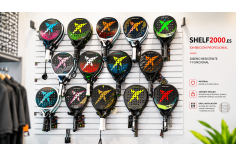
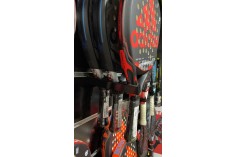
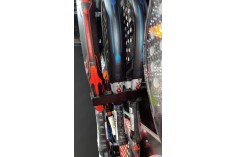
Walls are among the most valuable resources in stores and clubs with limited floor space. They allow rackets to be displayed vertically, keep products organised and preserve open circulation areas.
A modular system can adapt to different product sizes, formats and categories. It can also be reconfigured when the assortment changes, a new brand is introduced or a temporary campaign is launched.
Vertical presentation improves the frontal visibility of each racket and simplifies product comparison. It can also be combined with shelves, hooks and accessory supports to create a complete commercial solution within one area.
For the wall to perform effectively, the display needs a clear hierarchy. New arrivals, premium products and featured collections should occupy the most visible positions, while the remaining range is organised logically and accessibly.
The sector is moving towards retail spaces that are more flexible, more specialised and more connected. Stores and clubs must respond quickly to new collections, changes in demand and campaigns linked to sporting events.
Modularity will remain one of the most important trends. Display systems will need to expand, reduce or reorganise categories without major refurbishment.
Visual information will also become increasingly important. Customers need to identify player level, playing style, balance and key product benefits quickly.
Digital integration will continue to advance. QR codes, digital labels, screens and connected catalogues will provide additional information without creating excessive visual clutter.
Another major trend will be market-specific adaptation. A retailer in an established padel country will not have the same requirements as a small club corner in a developing region. Merchandising must reflect customer knowledge, available space and local demand.
Sustainability will also influence commercial design. Durable, reusable and reconfigurable systems help reduce replacement cycles and improve the long-term value of retail investments.
Padel in 2026 is an increasingly complete ecosystem. International competition creates attention and aspiration, the FIP rankings maintain an ongoing sporting narrative, amateur competitions sustain recurring participation, and clubs and retailers convert that interest into economic activity.
The market continues to offer substantial opportunities, but it is also more professional and demanding. Product availability alone is no longer enough. Businesses need planning, customer insight and a coherent commercial experience.
The international calendar can guide campaigns and inventory decisions. Rankings can help identify the players, products and brands attracting the greatest visibility. Amateur competitions can activate communities and generate repeat purchases. However, all of these opportunities require a point of sale that can present, explain and organise products effectively.
Merchandising therefore becomes a strategic tool. A well-structured space simplifies selection, reinforces specialist positioning and improves the commercial performance of the available area.
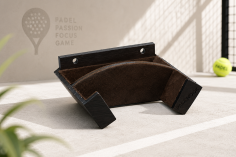
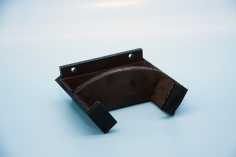
At Shelf2000, we develop modular display systems and retail fixtures for padel shops, clubs and specialist sports environments. Our solutions help businesses organise rackets, accessories, footwear and equipment while making better use of walls and adapting each installation to the needs of the space.
An effective display system does more than increase capacity. It helps create clear categories, refresh campaigns, highlight new products and deliver a more professional customer experience.
The padel market will continue to evolve. Businesses that successfully connect sporting trends, consumer behaviour and point-of-sale strategy will be better positioned to achieve sustainable growth in an increasingly competitive environment.
Do you need our help?