The Padel Store That Never Gets Old: How to Design a Reconfigurable Space That Sells Better All Year Round
In 2026, the most competitive padel store is not necessarily the largest or the most stylishly decorated. It is the one that can quickly adapt to new collections, campaigns, promotions, and changing customer buying habits without losing its visual consistency or commercial effectiveness. Intelligent space reconfiguration has become a genuine competitive advantage, helping retailers sell more, refresh product displays more efficiently, and keep their stores looking dynamic throughout the year.
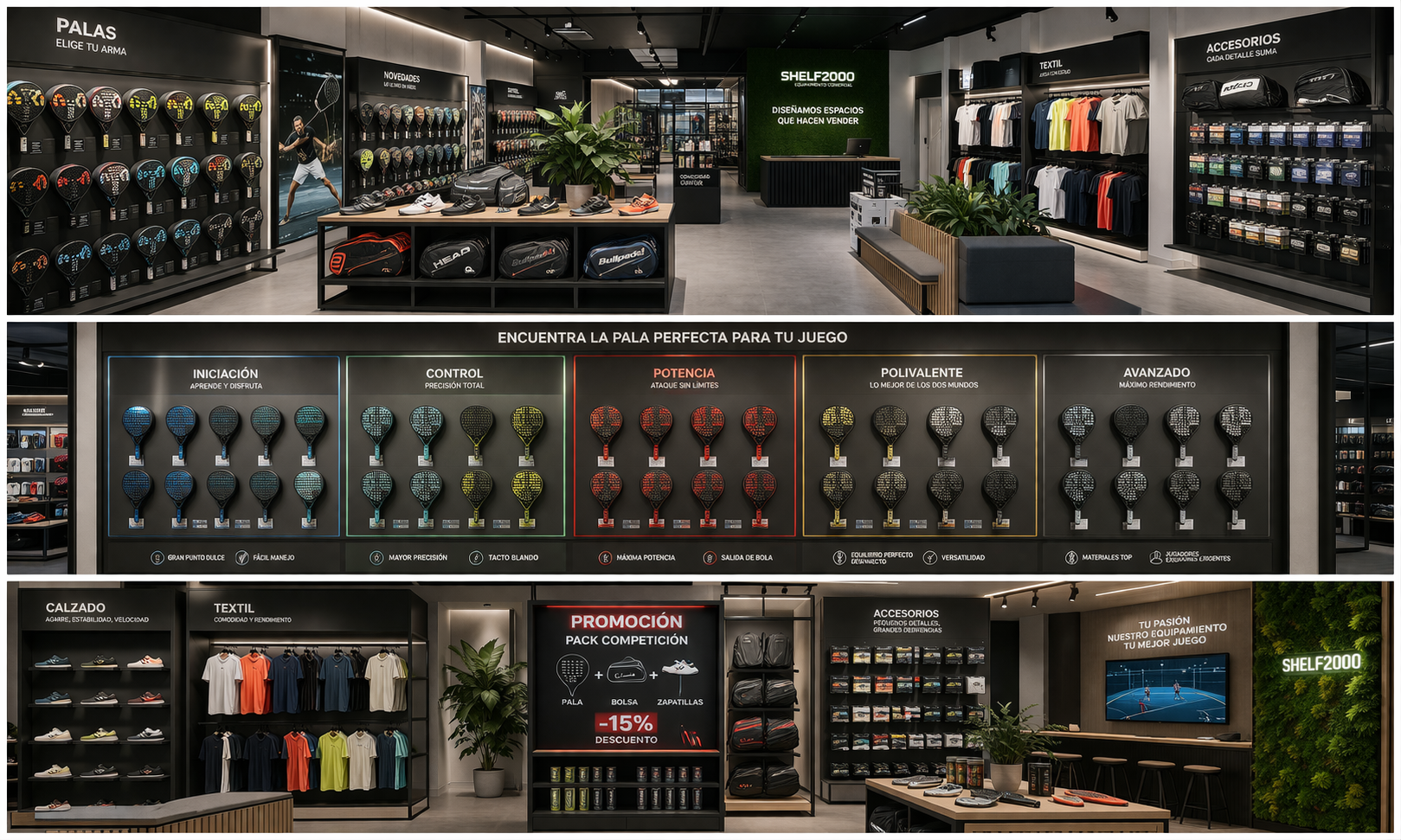
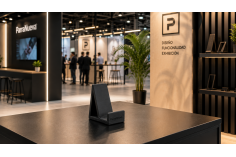
A reconfigurable padel store allows retailers to update product displays without sacrificing visual consistency or commercial performance.
For years, many padel stores were designed as if their main objective was simply to make a great first impression on opening day and keep the same layout for years afterward. Retailers invested in furniture, organized the walls, displayed the rackets, created dedicated product areas, and considered the project complete. Today's retail landscape, however, has changed dramatically. A store no longer competes only through its product assortment or pricing—it also competes through its ability to evolve, adapt, and remain attractive, practical, and commercially effective over time.
This shift has had a particularly strong impact on the padel industry. The market has become increasingly professional, brands introduce new collections more frequently, customers compare products more carefully, and purchasing decisions are made faster than ever before. At the same time, the commercial calendar is no longer based solely on long seasonal campaigns. Retailers now manage product launches, flash promotions, tournament campaigns, merchandising organized by player level, club partnerships, ambassador collections, product bundles, complementary accessories, and constant changes in product priorities. All of this requires a retail environment capable of responding quickly.
The key question is no longer simply how a padel store should look, but how it should be designed to evolve without losing order, identity, or selling power. This is where the concept of a reconfigurable store becomes essential: a retail space created not to remain static, but to adapt naturally as the business grows and changes.
Designing for Opening Day Is Not the Same as Designing for Year-Round Sales
One of the most common mistakes in specialist retail is designing a store with a static mindset. The focus is placed on creating an impressive first impression, an attractive layout, and a display that appears complete from day one. This approach may work well for a few weeks or even several months, but weaknesses quickly become apparent when the business needs to move products, highlight a particular range, introduce a new campaign, or change the commercial story within the store.
At that point, the real challenges emerge: display systems that are too rigid, oversized product areas, overcrowded walls, visual messages that no longer match the current inventory, improvised promotional displays that disrupt the overall design, accessories hidden in low-visibility areas, and, ultimately, a store that feels outdated long before it actually is. The problem is not the age of the premises—it is that the merchandising system was never designed to keep pace with the realities of modern retail.
In a padel store, customers notice this almost immediately. They instinctively recognize whether the space feels alive or simply overloaded with products. A dynamic retail environment communicates expertise, freshness, specialization, and trust. A static one may reflect the effort invested during its opening, but it can also suggest a lack of commercial vision. In a market where perception is almost as important as the product range itself, this distinction has a direct impact on conversion rates.
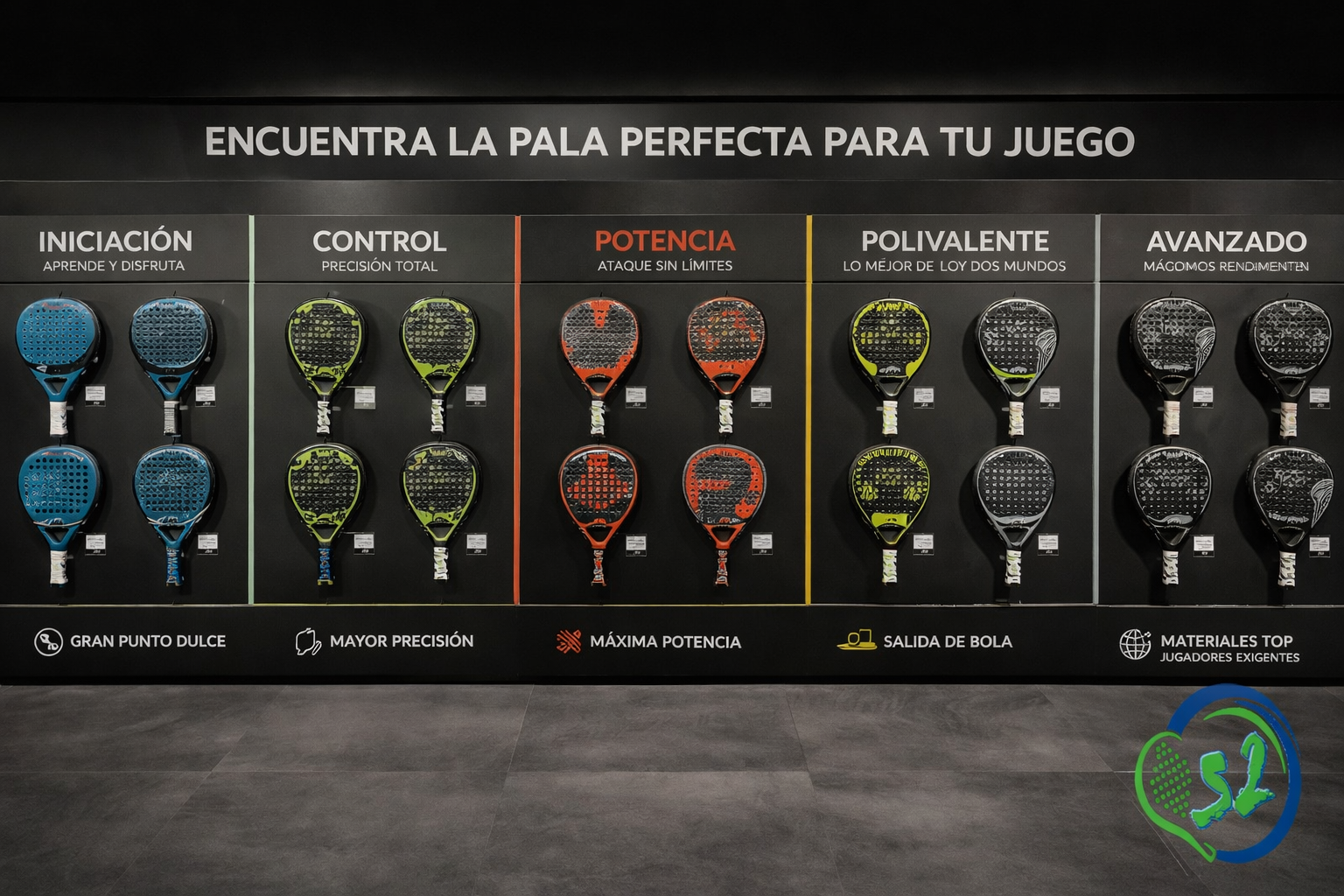
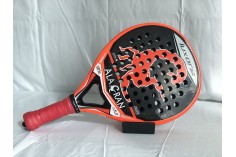
Reorganising the store by campaigns, product ranges or player profiles makes the assortment easier to understand and speeds up purchasing decisions.
What a Reconfigurable Store Really Means
Talking about reconfiguration does not mean filling a store with movable elements without purpose or turning the retail space into something that changes constantly for the sake of appearance. A well-designed reconfigurable store is one that has been equipped from the outset with a modular, flexible and commercially focused approach. It is a retail environment capable of changing product priorities, reorganising display areas, updating visual messages and shifting sales focus without requiring constant renovations or improvised solutions.
This translates into very practical decisions. For example, display systems that allow rackets to be reorganised by category, player level or campaign; panels and structures that can be modified without creating visual clutter; furniture that never limits future layout changes; display supports that present products clearly; and an overall concept where the store does not rely on one fixed layout but on a structure designed to evolve over time.
When properly implemented, modularity is far more than an aesthetic feature. It is a commercial management tool. It enables the retail space to support the business instead of restricting it. It allows retailers to highlight the products that matter most at any given time, respond quickly to new product launches, seasonal promotions or changes in customer demand, and maintain a constant sense of freshness without redesigning the entire store every few months.
Why This Approach Works Particularly Well in Padel Retail
Padel has evolved into a mature and increasingly sophisticated retail market. Today's customer enters the store with more information, stronger brand awareness and higher expectations. They have already explored collections online, compared prices, recognised brands, followed professional players, identified product ranges and expect a specialist retailer capable of helping them make the right decision quickly.
In this context, rigid or purely accumulative product displays become far less effective. Specialist padel retailers need merchandising with purpose. The store should be able to highlight control rackets, power rackets, beginner collections, accessory campaigns or products linked to a particular tournament or sporting event. The sales focus within the store must be capable of changing without sacrificing consistency.
In addition, padel stores operate under very different business models. Some are located inside clubs, others function as pro shops, some combine technical equipment with apparel and accessories, while others must maximise very limited retail space. In every one of these situations, the ability to reconfigure the store efficiently becomes an immediate competitive advantage.
A rigid retail environment forces the business to adapt to the furniture. A truly reconfigurable store does exactly the opposite: it allows the retail equipment to support the sales strategy. Although this difference may appear subtle, it has a significant impact on the profitability of the retail space.
The Commercial Advantages of a Flexible Display System
The first major advantage is speed. When a store can update its merchandising quickly, it can react faster to commercial opportunities. A standard wall can instantly become a themed showcase, a secondary area can be transformed into a high-impact promotional zone, new product launches can receive immediate visibility, and seasonal campaigns can be introduced without disrupting the overall presentation. In a market where innovation matters and customer attention is captured within seconds, this speed represents a considerable competitive advantage.
The second advantage is clarity. A flexible retail environment allows the product assortment to be reorganised according to the objectives of each campaign. Sometimes it makes more sense to merchandise by brand; at other times by player type, playing style, product technology or customer needs. Having the flexibility to change this merchandising logic improves product understanding and makes purchasing decisions easier.
The third advantage is the perception of freshness. A store that regularly updates its layout with clear commercial intent communicates dynamism and professionalism. Even though the physical space remains the same, customers feel they are discovering something new, better presented or better explained. This perception increases the store's perceived value and strengthens its professional image.
The fourth advantage is operational efficiency. When retail equipment has been designed for flexibility, everyday store management becomes much easier. Restocking, moving products, reorganising displays or highlighting promotions becomes part of the normal retail routine instead of a complicated task. This reduces the need for temporary solutions, minimises improvisation and ensures greater visual consistency throughout the store.
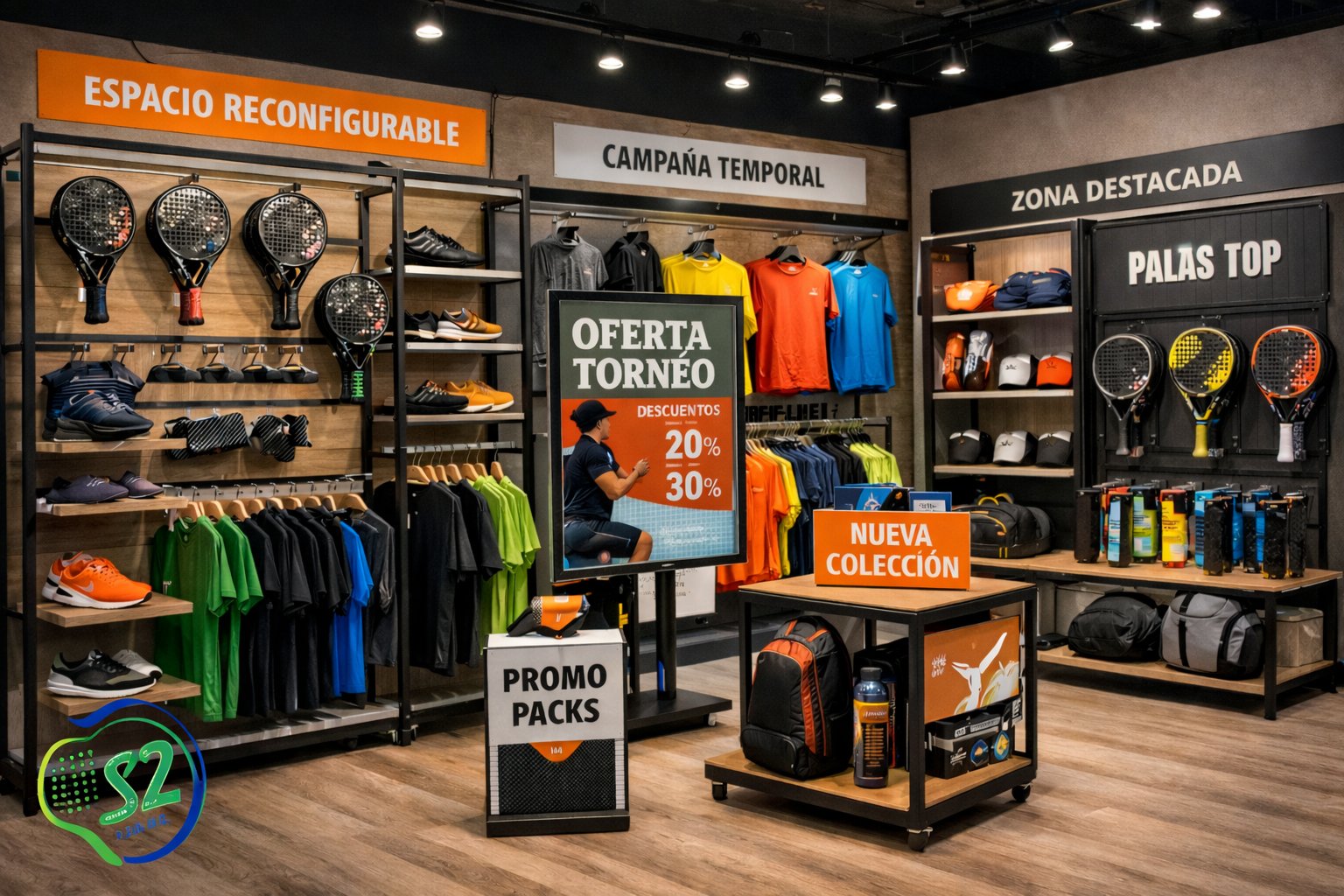
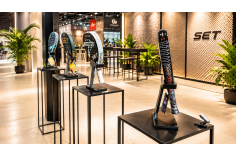
Flexible merchandising makes it easy to introduce promotions, product launches and cross-selling opportunities without overcrowding the store or compromising its visual identity.
How to Apply This Strategy Inside Your Store
For a padel store to be truly reconfigurable, simply moving products around from time to time is not enough. It requires careful planning. The first step is understanding that merchandising should not be treated as a static snapshot, but as a dynamic system. A system of product hierarchies, customer pathways and retail zones that can evolve while remaining easy to navigate.
The main display wall, for example, should not always follow the same merchandising logic. At different times of the year it may showcase new arrivals, highlight a specific brand, focus on player categories or feature high-margin collections depending on current business objectives. Likewise, secondary areas can easily become impulse purchase zones, cross-selling spaces or seasonal promotional displays without introducing unnecessary visual clutter.
It is also highly effective to distinguish clearly between the permanent merchandising structure and tactical merchandising. The permanent structure maintains the store's core organisation: product categories, visual consistency, brand identity and overall coherence. Tactical merchandising introduces movement: product launches, promotional bundles, club campaigns, featured products and seasonal offers. When these two layers work together, the store does not become disorganised—it evolves.
Another essential aspect is customer navigation. Reconfiguration should never become chaos. Every change must preserve an intuitive shopping experience. Customers should immediately understand where each product category is located, which products deserve attention and how different options can be compared. This is why retail equipment must do more than simply hold products—it must actively organise and communicate them.
Common Mistakes That Prevent Retail Evolution
One of the most frequent mistakes is overcrowding display walls from the very beginning. When every available space is permanently occupied and every fixture appears fixed, there is no room left for flexibility. Although the store may initially look fully stocked, it loses the ability to create focal points, improve visibility and redirect customer attention.
Another common mistake is relying on highly decorative display solutions that offer little practical flexibility. Some stores create an impressive first impression but become extremely difficult to update without disrupting the entire design. In specialist retail, aesthetics should always support commercial performance. If every merchandising update requires excessive time, effort or compromise, the display system is no longer commercially efficient.
It is equally common to organise the entire store according to a single merchandising principle for months, even when it no longer reflects business priorities. Organising products exclusively by brand, for example, may not be the most effective strategy if a campaign needs to focus on player levels, playing styles or price opportunities. Conceptual rigidity also causes a store to feel outdated.
Another particularly damaging mistake is using promotions as visual patches. When a retail space has not been designed to accommodate temporary campaigns, retailers often resort to improvised tables, oversized signage or overcrowded promotional displays. Instead of communicating opportunity, these solutions create confusion. And in a specialist retail environment, confusion reduces customer confidence.
The Store of the Future Will Not Be the Most Spectacular—It Will Be the Most Adaptable
Specialist retail is evolving towards business models that are more agile, clearer and more profitable. In the padel sector, this means that retail equipment should no longer be judged solely by its physical appearance, but by its ability to support a dynamic commercial strategy. A great display system is not one that remains unchanged for years, but one that enables the store to stay relevant, modern and commercially effective without requiring a complete redesign every season.
Designing a reconfigurable retail space ultimately means designing with long-term business vision. It means recognising that products change, customers change, marketing campaigns change and retail environments must be prepared to evolve alongside them. It means moving from a static store to a functional one. From rigid decoration to intelligent commercial infrastructure. From a fixed installation to a retail system designed for continuous evolution.
In a market as dynamic as padel, this mindset creates a genuine competitive advantage. A store that can be reorganised naturally sells more effectively, communicates more clearly and remains commercially relevant for much longer. Because, in the end, the padel store that never grows old is not the one that never changes—it is the one that has been designed to change exceptionally well.