Shopping Cart
7 Mistakes That Are Reducing Sales in Your Padel Store (And How to Fix Them)
Is your padel store selling less than expected? In many cases, the problem isn't the quality of your products or your pricing strategy. Instead, poor store layout, inadequate lighting, unclear signage and ineffective product displays can all reduce sales without you even realizing it.
In this article, we'll explore the 7 most common mistakes made by padel stores and explain how to fix them to improve the customer experience, increase your average transaction value and create a more attractive, organised and profitable retail space.
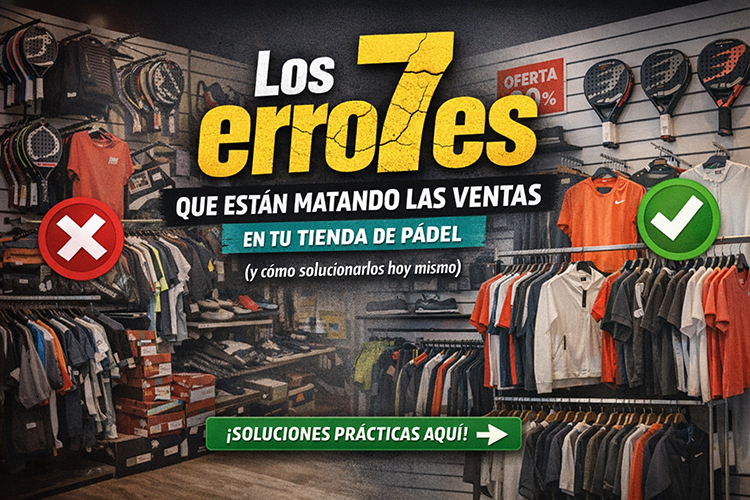
1. Poor Store Layout
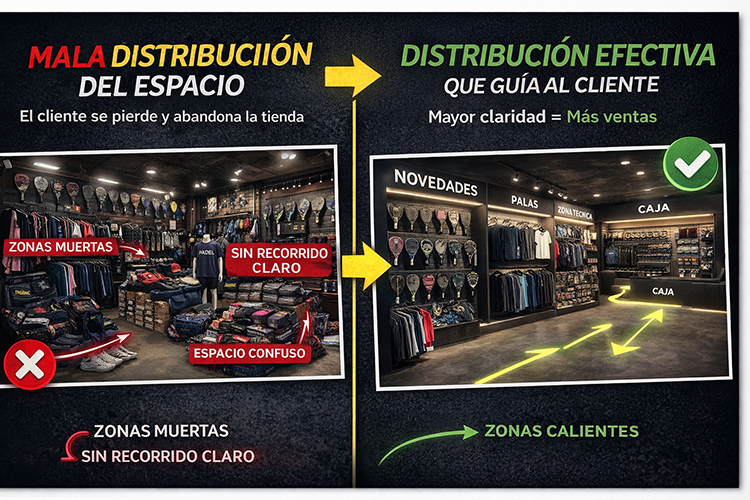
A store without a clear customer journey creates confusion from the moment shoppers walk through the door. If visitors don't immediately understand where to go, which products deserve their attention or how the store is organised, they're far more likely to leave without making a purchase.
Your store layout directly affects how long customers stay, how comfortable they feel and how many products they actually discover. Dead areas, cluttered aisles or displays without a logical structure all reduce opportunities to generate sales.
The solution is to create a natural and intuitive shopping journey. Customers should move easily from the entrance to featured products, then through racket displays, footwear, apparel, accessories and finally to the checkout area. This structure helps customers navigate the store while allowing you to showcase your product range strategically.
It's also important to make the most of your high-traffic areas, such as the entrance, main walkways and feature displays. These locations are ideal for presenting new arrivals, promotional offers and your best-selling products.
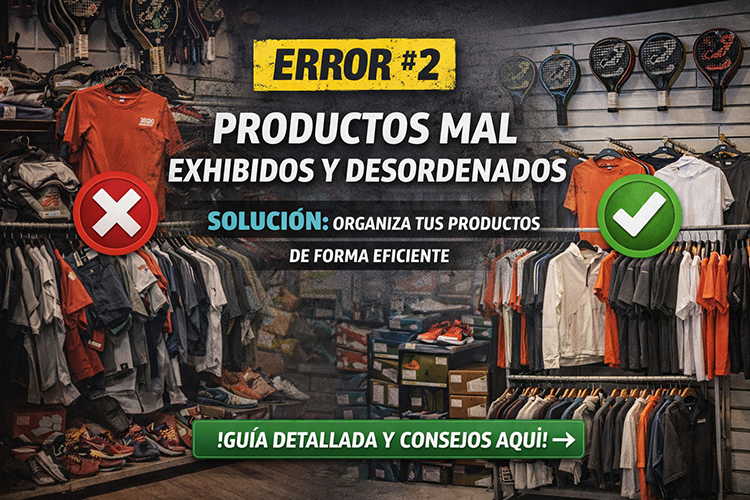
2. Too Much Product Without a Visual Merchandising Strategy
Displaying more products doesn't automatically generate more sales. In fact, the opposite is often true. When customers are faced with visual overload, they find it harder to compare products, become overwhelmed and often postpone making a purchase.
This is a common issue in padel stores where rackets, clothing, shoes and accessories are displayed together without any clear visual hierarchy. The result is a cluttered retail environment that feels confusing rather than inspiring.
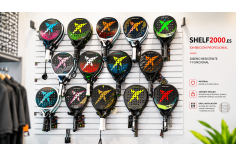
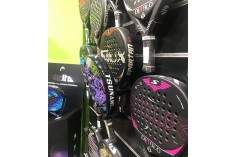
An effective product display should help customers understand which items are new, which belong to different performance levels and which products best suit their needs. Organising merchandise by category, playing level, brand or product type creates a much clearer shopping experience.
Leaving enough visual space between displays is equally important. Showing fewer products in a more structured and attractive way often creates a stronger perception of quality while making purchasing decisions easier.
3. Poor or Inadequate Signage
If customers can't immediately identify where each product category is located, the shopping experience quickly becomes frustrating. Poor signage creates uncertainty, slows down the buying process and often prevents shoppers from discovering products they would otherwise purchase.
A well-signposted padel store communicates professionalism, organisation and expertise. On the other hand, a store without clear visual guidance forces customers to ask for assistance constantly or search on their own, reducing convenience and customer satisfaction.
Adding clear category signs, promotional messages and easy-to-read navigation throughout the store significantly improves customer orientation. Effective signage isn't simply decorative—it's one of the most valuable sales tools available.
4. Poor Lighting
Lighting has a direct impact on how customers perceive your products and your store environment. A dark, flat or poorly lit retail space makes products look less appealing, reduces the perceived quality of your merchandise and makes it harder for customers to appreciate colours, materials and technical features.
This is especially important for premium products such as padel rackets, technical sportswear, footwear and high-performance accessories, where presentation plays a key role in communicating quality and innovation.
An effective lighting strategy combines consistent general lighting with focused accent lighting on key areas such as the storefront window, featured displays, new arrivals and promotional products. These focal points naturally attract customers' attention and guide them through the store.
Avoid excessive shadows, harsh reflections and uneven lighting between different areas of the shop. Investing in a professional lighting system not only improves the appearance of your store but also increases the perceived value of your products and encourages more purchases.
5. Failing to Guide the Customer Journey
A visually attractive store isn't enough on its own. Customers should naturally move through the areas that matter most from a commercial perspective. Without a carefully planned customer journey, visitors tend to wander randomly and often miss important product categories.
Designing the flow of movement through the store increases product exposure, encourages cross-selling opportunities and creates a more comfortable shopping experience. The positioning of fixtures, product displays, category zones and aisle widths all contribute to directing customer behaviour.
The ideal shopping journey should feel intuitive rather than forced. Creating visual stopping points where customers naturally pause to discover new products or complementary items increases engagement throughout the store.
A store that successfully guides customers through every section consistently generates better sales because it presents products in a logical, strategic and customer-friendly way.
6. An Unattractive Storefront Window Display
Your storefront window is your store's first salesperson. Before customers even walk through the door, it should capture their attention, communicate your expertise and create curiosity about what's waiting inside.
Poorly designed window displays often suffer from too many products, weak composition, confusing messages or displays that remain unchanged for months. As a result, they lose their ability to attract attention and no longer communicate freshness or innovation.
An effective storefront display should focus on one clear message. It might showcase a new collection, highlight a promotional campaign, feature your best-selling products or promote equipment for a specific type of player.
Refreshing the window display regularly, creating clean visual compositions and using targeted lighting will significantly increase its effectiveness. The objective isn't to display every product you sell—it's to encourage people to step inside your store.
7. Failing to Take Advantage of Cross-Selling
Many padel stores successfully sell a racket, a pair of shoes or a technical shirt, but miss the opportunity to increase their average transaction value by offering complementary products. Cross-selling is one of the fastest and most effective ways to boost revenue without attracting more customers.
In the padel industry, cross-selling opportunities are everywhere. Overgrips, racket protectors, balls, wristbands, bags, socks and technical accessories can all be sold naturally when displayed alongside the main product.
For example, a racket display should also include overgrips, vibration dampeners, racket protectors and ball tubes. Near footwear, you can present technical socks, insoles or shoe care products. Around the checkout area, place small impulse-purchase accessories that customers can easily add to their basket.
You can also increase sales by creating product bundles, recommending complete equipment packages or grouping products according to different player profiles. The key is to make these suggestions feel helpful rather than overly commercial.
How to Identify These Problems in Your Own Store
The easiest way to evaluate your store is to look at it through the eyes of a first-time customer. Ask yourself whether the product categories are easy to understand, whether your best-selling products stand out, whether the shopping journey feels natural and whether customers have a reason to stop and explore each section.
You should also analyse which areas receive the least traffic, which products generate the most customer questions and where shoppers tend to hesitate or change direction. These behaviours often reveal problems with store layout, product presentation or signage.
In many cases, improving your store doesn't require a complete renovation. Small adjustments to your fixtures, lighting, product displays or customer flow can dramatically improve the shopping experience and increase sales.
Conclusion
A successful padel store doesn't sell more simply because it stocks great products. It sells more because those products are presented effectively, the store is designed to make shopping easy and customers enjoy a professional, engaging and enjoyable buying experience.
Correcting these seven common mistakes can significantly improve your store's profitability without increasing your retail space or expanding your inventory. Better product presentation, smarter layouts, effective lighting and well-planned cross-selling strategies allow every square metre of your store to perform more efficiently.
Very often, the biggest improvement doesn't come from selling more products—it comes from presenting the products you already have in a much more effective way.
Want to Improve Your Padel Store?
At Shelf2000.es, we specialise in retail display systems, merchandising solutions and commercial fixtures for padel stores and clubs. Our solutions help retailers optimise their available space, improve product presentation and create more attractive, organised and profitable retail environments.
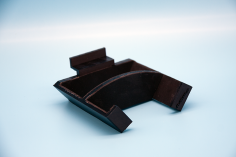
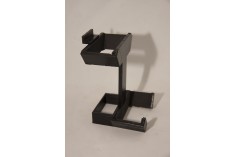
Flexible retail display systems make it easier to organise product categories, highlight high-margin items and quickly adapt your store to new collections, seasonal campaigns and promotional events throughout the year.