Shopping Cart
Padel Retail · Store Fixtures · 2026
The professional fixtures reshaping padel stores and trade stands in 2026
In 2026, padel’s maturity is clear: stores and trade stands no longer compete only on assortment or price, but on product presentation and the buying experience. Fixtures stop being a cost and become a direct investment in turnover, clarity, and conversion.
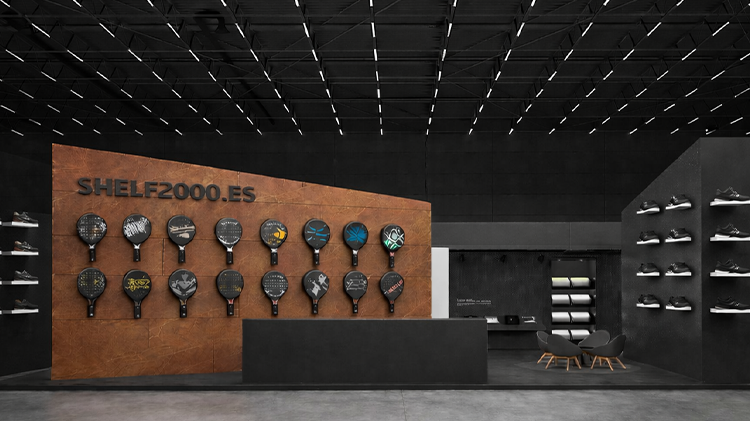
Padel is not a passing trend. In 2026, what the industry has been building for years is consolidated: professionalism, specialisation, and a more demanding customer. Retail shows it clearly: a store no longer “places” rackets—it presents them.
Following Shelf2000’s recent editorial direction, the message is simple: less improvisation, more strategy. Customers want to understand the offer in seconds. When space is properly designed, the store sells better even at peak times.
1) From selling rackets to building selling spaces
A few years ago, hanging rackets on a wall was enough. Today it is not. The best-performing stores in 2026 treat space as a sales tool:
- Products are not piled up; they are merchandised.
- Customers don’t “search”; they recognise.
- Fixtures don’t decorate; they sell.
2) Modularity becomes the new baseline
One of the most visible shifts this year is the consolidation of modular fixture systems: scalable, adaptable solutions that grow without rebuilding the store and adjust to seasonal campaigns and new launches.
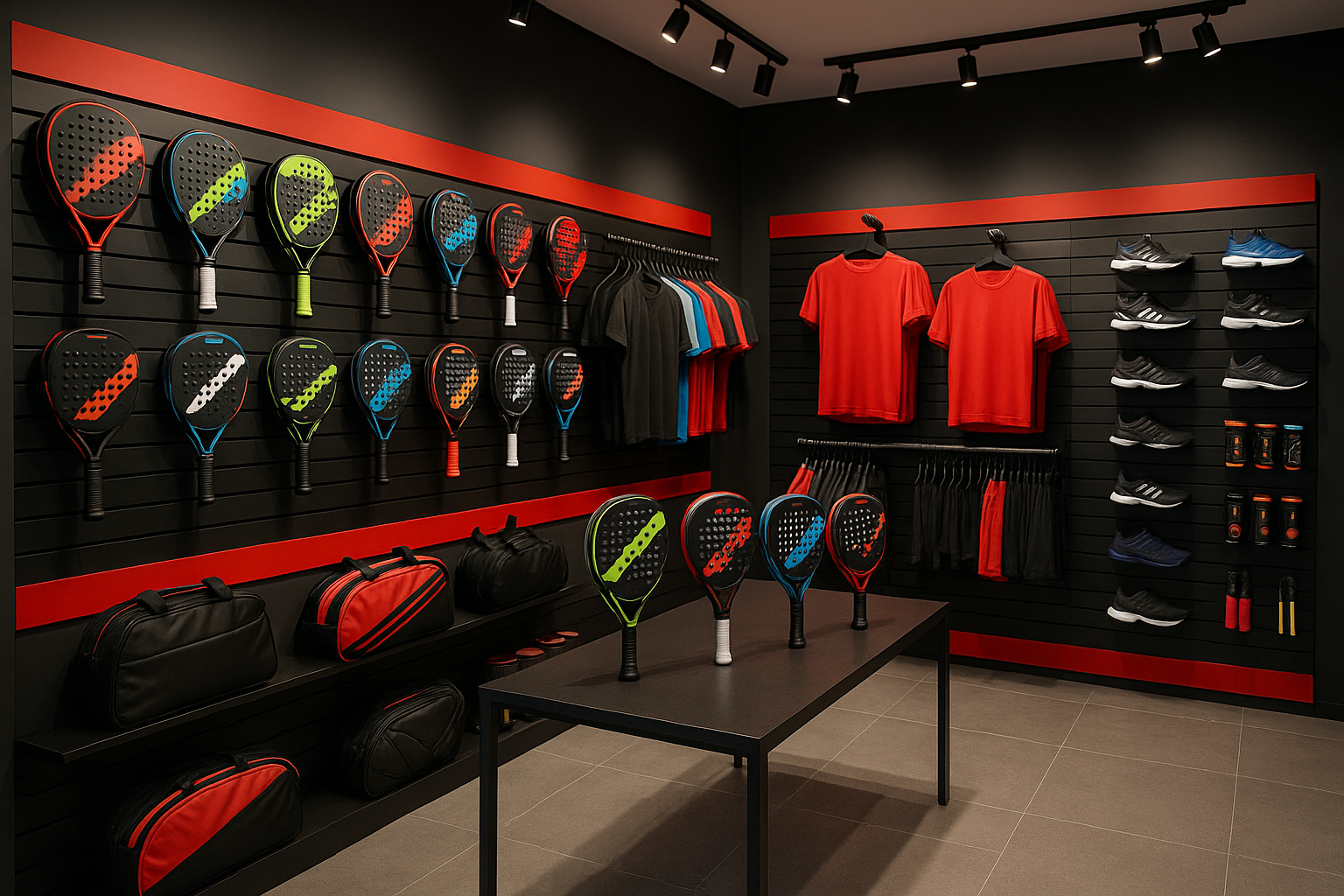
For small stores—most of the real market—this is decisive. There is limited space, but many references to show. Modularity lets you display more without clutter, while keeping order.
3) Vertical display: turning the wall into a sales engine
The wall doesn’t consume floor circulation, and when designed correctly it multiplies selling capacity. Vertical display:
- Increases capacity without taking floor space.
- Improves product readability (models, ranges, pricing).
- Reduces friction: less unnecessary handling, faster decisions.
4) Trade stands: less spectacle, more conversion
Trade shows have changed. Visitors are more demanding and have less time. In 2026, the stands that stand out are those that explain quickly and show the product as it would look installed in a store: clear, organised, and ready to sell.
A practical rule takes over: a stand should not be a purely temporary structure. It should become a reusable asset, moving from show to store without losing purpose. Less decoration, more real demonstration.
5) Technical materials: durability and brand coherence
Serious retail returns to a traditional idea: the product comes first. Technical, resistant, visually neutral materials work best. Fixtures support the product—they don’t compete with it. The result is a solid, professional look day after day.
6) Customers want to see, not be convinced
Customers arrive informed. The store must enable quick comparison, minimal friction, and hands-on only when intent is real. This improves experience and frees staff time.
7) Small stores, smart solutions
Most padel stores are specialised businesses, not big-box retail. That’s why compact, direct, sales-driven solutions win: more display, better order, and a clear visual story.
8) Conclusion
2026 doesn’t reward improvisation. It rewards order, function, and coherence. Stores and stands that embrace this rotate product better, build trust faster, and sell more. Not a revolution—an evolution based on doing the basics right.