Shopping Cart
There are no more items in your cart
- On sale!
The battle for the point of sale: how physical padel retail is reinventing itself in the face of ecommerce

Padel is currently experiencing one of the most significant expansion phases in its history. New clubs, a growing number of players and the arrival of major investors have driven the development of the sector across Europe, America and the Middle East.
At the same time, ecommerce has profoundly changed the purchasing habits of athletes. Today a player can compare dozens of racket models in a matter of minutes, read specialized reviews and receive the product at home within just a few days.
This new scenario has sparked a debate within the sector: what role should the physical store play in the era of ecommerce?
The answer is not the disappearance of traditional retail, but its transformation. Specialized stores, clubs and display spaces are evolving towards a more strategic model where the player experience becomes the real added value.
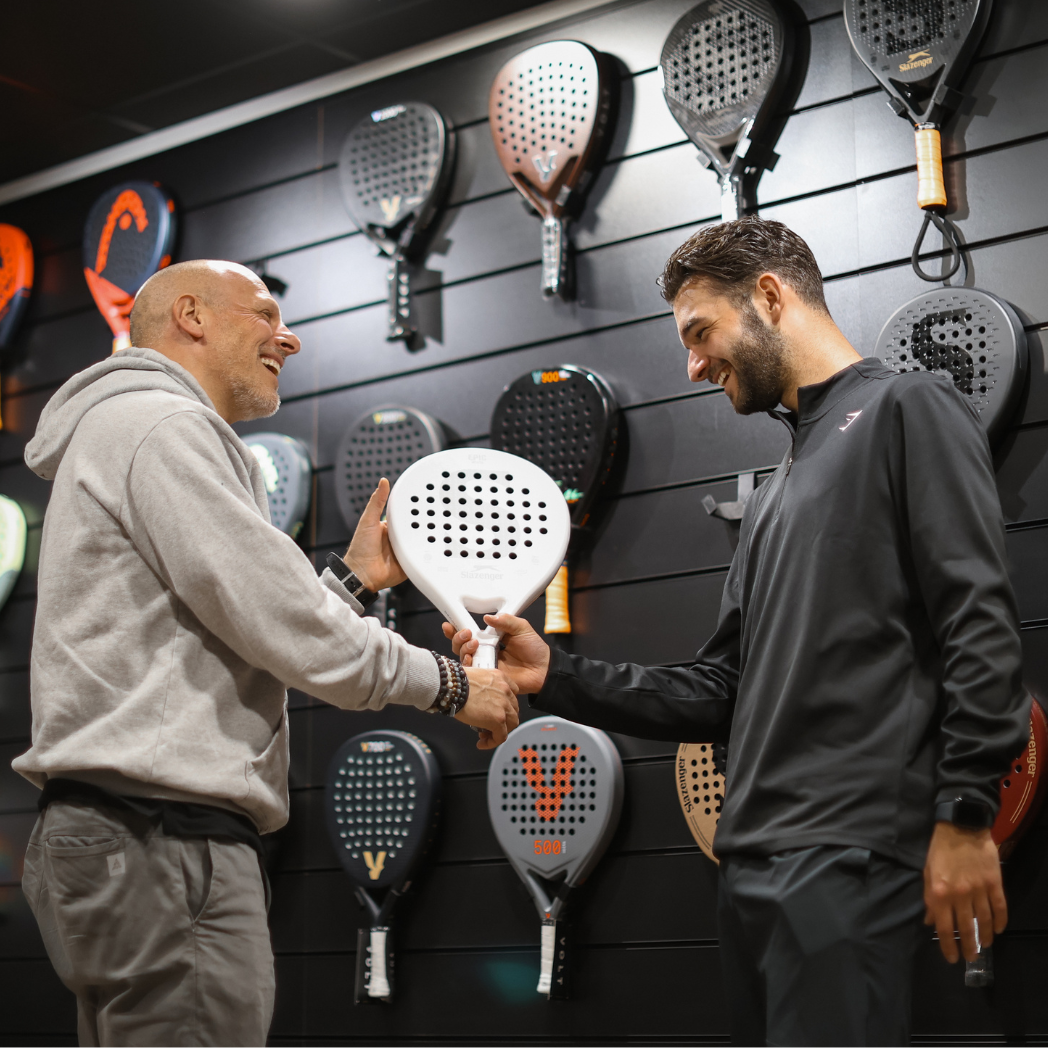
Unlike many other sporting goods, the padel racket maintains a strong sensory dimension. The player does not only analyze the price or technical specifications; they also want to feel the weight, check the balance and imagine the shot with that specific model.
This factor keeps physical stores as a key point in the decision-making process. Many players research online, but the decisive moment often occurs when they hold the racket in their hands.
In addition, the advice of a specialized salesperson still has value. In a market where there are dozens of brands and hundreds of models, professional guidance can make the difference between a satisfying purchase and a wrong choice.
For this reason, specialized retailers remain an essential element within the padel ecosystem.
Sports retail is evolving towards a broader concept. Today specialized stores are not limited to selling products: they aim to create an environment where players can discover, learn and experience.
Many padel stores are incorporating new areas designed to improve customer relationships and strengthen brand identity.
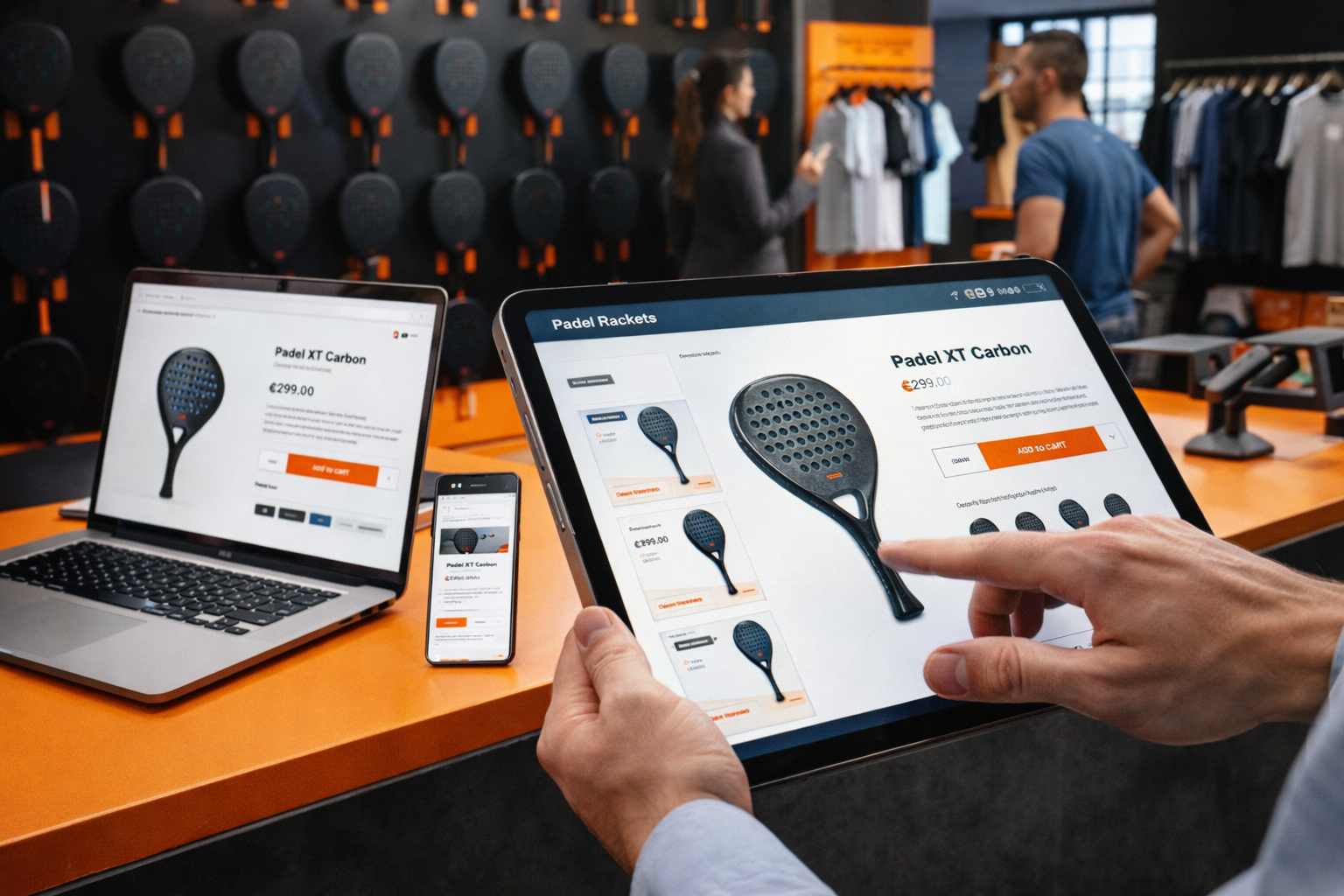
The growth of ecommerce has forced many stores to redefine their strategy. Competition is no longer limited to the shop in the neighboring city; now a player can buy from any European ecommerce platform.
However, this situation has also opened new opportunities. Many stores are adopting omnichannel models where the physical experience and digital commerce complement each other.
In this hybrid model the player can discover the racket in the store, analyze it calmly and complete the purchase online if desired.
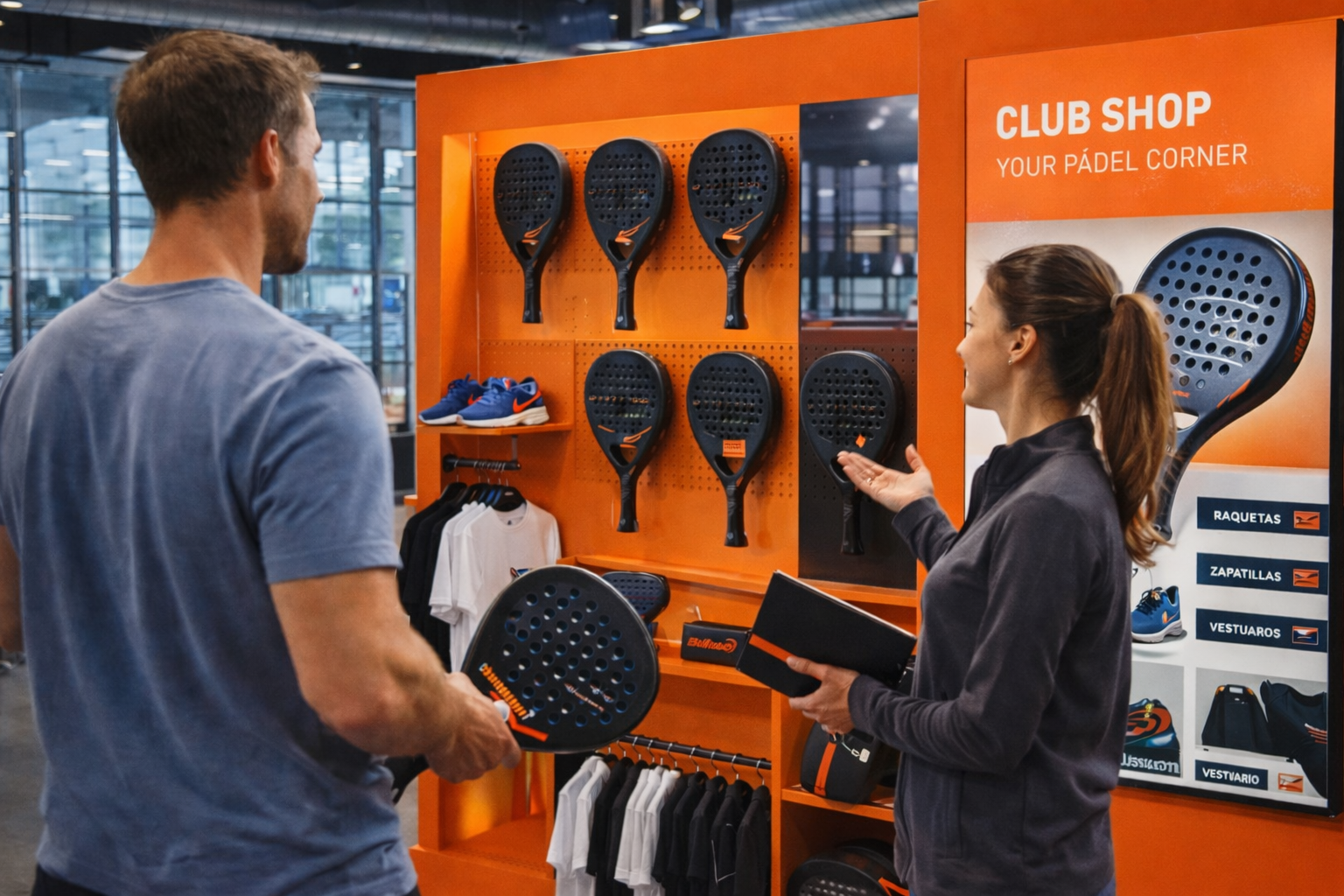
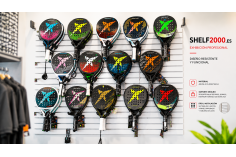
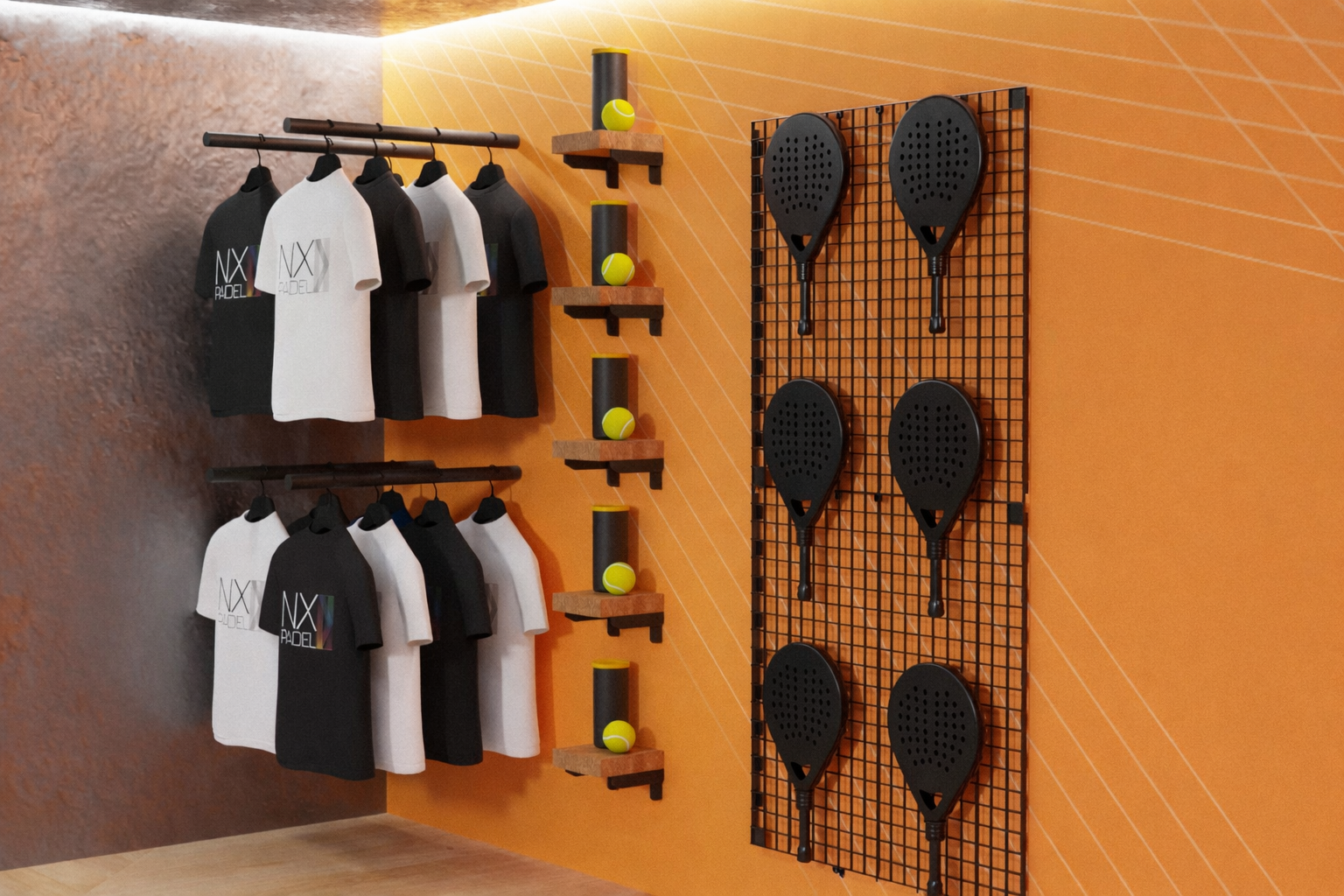
In an increasingly competitive market, the way rackets are presented inside a shop can directly influence sales.
For years, many stores have relied on improvised solutions to display their products.
Another important change is taking place inside padel clubs themselves. It is becoming increasingly common to find small display areas or micro-shops within sports facilities.
The popularity of padel has led to the emergence of new brands, new distributors and an ever-wider product offering.
Everything suggests that the future of the sector will not be dominated solely by ecommerce or by the traditional physical store.
Because in this sport, as in many others, the purchase often begins with a simple gesture: picking up the racket, feeling its weight and imagining the first shot on the court.